Friday, 24 June 2016

Picking a Project Car: A Guide for Beginners

Picking the perfect project car is the most exciting part of a restoration project.  It is also an important decision that must be given much thought and consideration.  Here a few tips for picking your first project car:

Do your research.
Choosing a car may be overwhelming given the several different types to choose from. Doing your research will greatly help in narrowing down your choices and will definitely make the selection process easier and less stressful. When choosing a car, consider if the replacement parts are readily available. Take note of the car's year and model as well.

Image source: gawlercarclub.com
  
Know where to look and what to look for.
If you are lost on where to look for a project car, searching online is a good place to start. Websites such as Craigslist and EBay are some good online sources for project cars. Attending car shows and automotive swap meets is also another way to find great project car prospects.

Aside from knowing where to look, it is also important to know what to look for. A project car, while mostly old and dilapidated, should at least be solid and useful. When choosing a car, make sure its frame is compact and not rusted. Check the trunk floor, carpets, and seats keeping in mind that repairing automotive bodywork can be costly and laborious.

Image source: philip.greenspun.com

Bring a friend.
Bringing a trusted friend or a fellow car enthusiast will help keep you from being distracted or overwhelmed when picking a project car. A friend can give you sound advice when needed and can make sure that you did not miss anything when selecting a car or dealing with the seller. Plus, it’s just more fun to be with a friend!

Hello, I’m Alexander Potoczak! Subscribe to my blog for more on cars and restoration projects.

Wednesday, 1 June 2016

Burn Rubber,Not Money: The Inexpensive Side Of Car Racing

Buying a car, regardless of purpose, is one of the more expensive luxuries that man indulges in. Not surprisingly, those who aim for a car racing slot spend the highest fees. Apart from buying the car itself (unless there are sponsors), the owner has to spend a ton of money for machine parts, maintenance, and licenses.

http://pictures.topspeed.com/IMG/crop/201003/risk-vs-reward-at-th-1_600x0w.jpg
 Image source: topspeed.com

In many cases, car parts have to be customized to make the automobile run faster and more efficient on the tracks. If the racer doesn’t know how to tweak his own car, then he has to spend even more for professionals. The costs alone would hinder any interested beginners in participating in the sport. However, there are ways for aspiring race car drivers to experience the thrill of the tracks without burning a hole in their pockets.

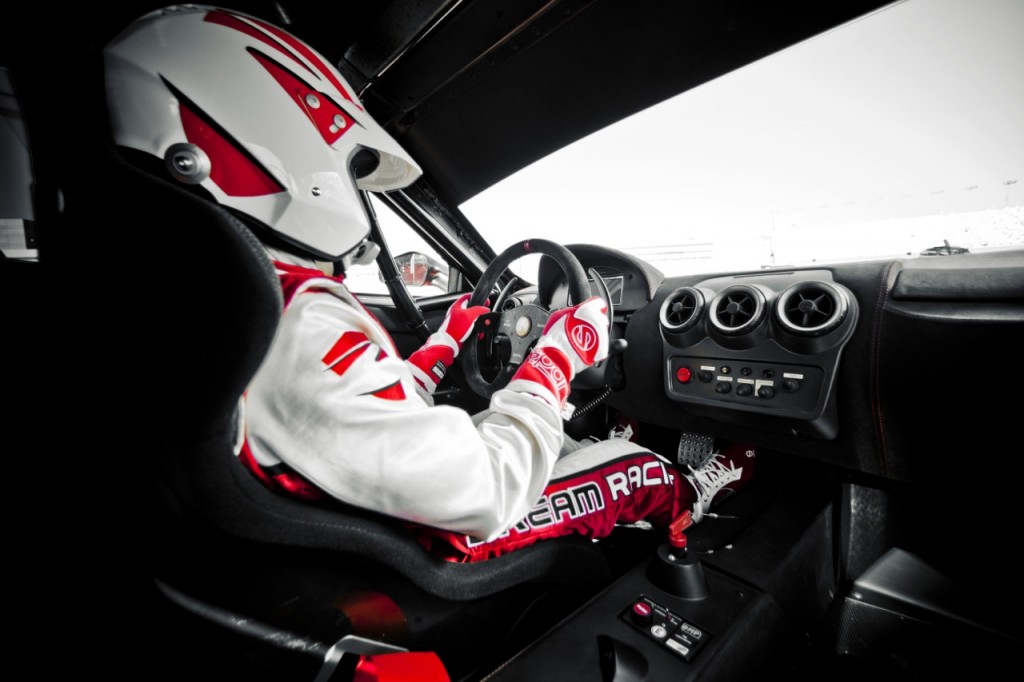
One of the crucial thing that the driver must do is identify what he is looking for in terms of racing experience. A multitude of choices are available for racing and car types.

https://thinkingdrivernews.files.wordpress.com/2014/01/race-car-driver.jpg
 Image source: thinkingdrivernews.com

One type of cost-efficient but still thrilling racing is hill climbing. In hill climbing, racers use the slope of the hill to accelerate while traveling downwards, thereby negating the necessity for an expensive high-end car. As for cars, participants can opt for a ready-built spec car so that they won’t get overwhelmed with all the costs of maintenance and tuning necessary.

To get a regular dose of updates about NASCAR and everything else about fast cars, follow me on Twitter. Alexander Potoczak here.

Monday, 16 May 2016

People’s Car: Origins Of The Iconic Volkswagen Beetle

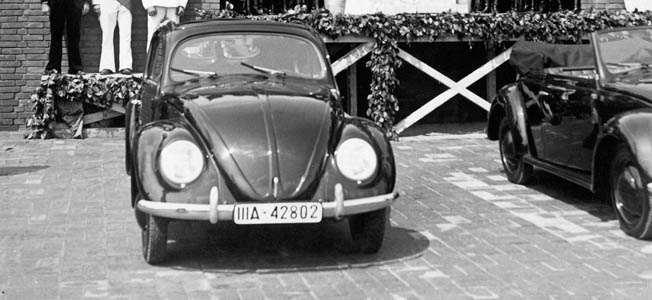
The Beetle is a well-loved car that has seen a lot of generations. Its sleek design and efficient engine made the car a household name.

Not a lot of people know about this fact, but the VW Beetle originated in Nazi Germany. It was designed by Dr. Ferdinand Porsche and none other than Adolf Hitler.

http://warfarehistorynetwork.com/wp-content/uploads/2014/04/The-Nazi-Porsche.jpg

The idea of the Beetle has been introduced in the mid-1930s. It was first designed as a civilian recreational vehicle. It was marketed as a small car that could carry a family of five.

Before the war, Hitler limited the price of the car to 900 marks and gave Porsche 10 months to build a prototype. Hitler monitored the progress but found out that Porsche was Czech. He quickly rectified the political problem by converting Porsche’s citizenship. Unfortunately, the war happened, and the production of the Beetles focused on the military activities. The “people’s car” became the “commander’s car”, the “bucket car”, and the “amphibious car.”

http://icdn1.digitaltrends.com/image/_simon_evans-1258x839.jpg
 Image source: digitaltrends.com

VW went back to operation after the war. The “people’s car” or the Type 1 was sold in America and other countries. By 1972, it sold more than 15 million units. People loved the Beetle because of its affordability and engine efficiency.

Even after so many decades, fans find themselves buying the latest Beetle models because it somewhat reminds them that a classic will never go out of style.

What else do you know about the Beetle? Let’s talk about cars! Follow me, Alexander Potoczak, on Twitter.

Wednesday, 2 March 2016

Greener Formula 1 Cars: Curbing CO2 Emissions for Sustainable Racing

The loud, thundering engines and flashing speeds of Formula 1 cars are integral aspects of the motorsport. These cars push the limits of current technology to create the most powerful automobiles that only science fiction can satisfy. 


Image source: wikipedia.org

Regular racing audiences might think of these high-power supercars as inefficient and environmentally harmful, considering the amount of fuel they consume just to reach their maximum speed. With new automotive technologies emerging, however, the dilemma on excessive CO2 emissions is gradually being addressed. At Formula 1, for example, recent developments in fuel efficiency like fuel injection, turbocharging, and energy recovery systems are increasingly popular. 

In 2014, the Federation Internationale de l'Automobile (FIA)—the top-tier governing body for F1 races—released a new 1.6-litre v6 engine standard that is smaller and more fuel efficient than the conventional 2.4-litre v8 engine. This new engine change can reduce fuel consumption drastically by up to 35 percent. This downsized engine doesn’t necessarily mean it is slower than its predecessor. The agency green-lighted the use of Energy Recovery System (ERS) for more impressive performance while taking the environment into consideration. 

Image source: weeklypique.com
Although ERS was used in past races, it was only limited to kinetic energy. In addition, the amount of stored energy from the previous system was limited. FIA currently doubled the amount of stored kinetic energy as well as introducing the use of heat energy for ERS. The ERS is a system that allows the car to store both kinetic and heat energy to generate electrical energy and use that force to propel the car, making it more efficient and environment-friendly. Currently, Formula 1 has imposed the reduction of maximum fuel capacity used by each team, from 150kg to 100kg, effectively reducing consumption by 30 percent. 

Alexander Potoczak here. I’m a marketing student with an enormous love for fast cars. Let's talk more on Twitter.